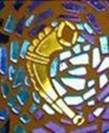
Shofar Halachot
Arthur L. Finkle
At the beginning of the 20th century, the Chafetz Chaim created the Mishnah Berura , an updated version of the Code of Jewish law (at least in one section dealing with holidays – Moed) codified in the 16th century.
What is a Shofar?
A Shofar is the horn of a kosher animal, except that of a cow, processed and used to sound notes as a bugle. Similar to a brass instrument, in which the lips vibrate to make the sound, there are no pistons or other devices to modify its pitch. (Mishnah 3:1)
Properties of an Animal Horn
An animal horn is a pointed, bony structure on the heads of many mammals. Most horned animals have a pair of horns. Such animals as cattle, sheep, goats, and antelope have true horns. Deer have horn-like growths that are not true horns. These growths are called antlers.
Horns have a bony core. The core is an extension of one of the skull bones. A layer of skin covers the core. This skin contains a protein called keratin that makes the horn extremely tough and durable. Keratin «KEHR uh tihn», is a tough, insoluble protein found in the outer layer of the skin of human beings and many other animals. This outer layer of skin is called the epidermis. The outermost layer of cells of the epidermis contains keratin. The keratin in these cells makes the skin tough and almost completely waterproof. In places where the skin is exposed to much rubbing and pressure—such as parts of the hands and feet—the number of cells containing keratin increases and a callus develops. Cells that contain keratin are constantly being shed and replaced by new ones. The condition known as dandruff results when the scalp sheds such cells.
Horns have a bony core. The core is an extension of one of the skull bones. A layer of skin covers the core. This skin contains a protein called keratin that makes the horn extremely tough and durable. Keratin «KEHR uh tihn», is a tough, insoluble protein found in the outer layer of the skin of human beings and many other animals. This outer layer of skin is called the epidermis. The outermost layer of cells of the epidermis contains keratin. The keratin in these cells makes the skin tough and almost completely waterproof. In places where the skin is exposed to much rubbing and pressure—such as parts of the hands and feet—the number of cells containing keratin increases and a callus develops. Cells that contain keratin are constantly being shed and replaced by new ones. The condition known as dandruff results when the scalp sheds such cells.
Keratin is also a part of certain structures that grow from the skin. For example, the nails and hair of human beings contain keratin. In animals, such growths as horns, hoofs, claws, feathers, and scales consist mainly of keratin. Keratin helps make these structures stronger and better suited to protect the body from the environment. (Wit, 2000)
What Shape Should the Shofar Be?
MB 586:1 procliams that is it best to have a curved shofar
The Talmudic rabbis, as was their wont, had a great debate over which kind of shofar to use on the High Holy Days. The Mishnaic rabbis argued that the shofar sounded on Rosh HaShanah should be “of an antelope and should be straight.”
Rav Levi argued that the mitzvah of hearing the shofar is fulfilled through the sounding of a bent or curved shofar. Rav Yehuda settled the dispute: “On Rosh HaShanah we use a bent rams horn and on Yom Kippur we use a straight (antelope) horn.”
Rashi, the great 11th century commentator, taught that being bent over is correct for Rosh HaShanah, while the Gemara explained it would best to stand as straight as possible on Yom Kippur. [Babylonian Talmud Rosh HaShanah 26b]
Can A Shofar Be Made Of Other Than A Kosher Animal?
The Mishna Berurua states that the preferable shofar for Rosh Hashanah should be made of a ram’s horn or other kosher animal and bent. See 586:16.
There are, however, some w ho disagree that the shofar must be made from a kosher animal. Indeed, because the Holy Tabernacle hosed non-kosher items: dye; elephant hides on the roof, certain secretions (honey of a non-kosher animal), silk; non-kosher food if unfit for human consumption; animal hairs; anointed oil and incense; and dyes of crimson.
For, indeed, since the corpus of the shofar is its note (not its material), one could construct a shofar with a non-kosher animal, except for that of cow
Proper Order Of Sounds
In Mishna Berura (“MB”)590 he covers the proper order of sounds
In section 1, he cites the debates of the Sages as to whether the teruah was either none staccato (short note) or three moaning sounds.
In the argumentation, the Sages quotes Shulchan Aruch (Code of Jewish Law) that the teruah is sounded nine times on Rosh Hashana and 3-times for the Jubilee Years. See Lev 25:9; Lev. 23:24; Num. 29:1
The Shofar is first indicated as sounding in the Jubilee Year (Yovel) Lev 25:8-13. Each teruah must be with honor guards called tekiah
However, the some Sages were in doubt as to whether the teruah is to be the nine staccato yelps or the broken shaver (3-moaning sounds. The Rabbi’s in the Talmud, who lived within 200-years after the Destruction of the Holy Temple, simply did not remember the sound articulation. Accordingly, in tractate Rosh Hashanah 33b, they compromised that the first refrain be terurah-shevarim; the second, teruah; and the third, shevarim, knowing that one refrain would be correct.
In gloss 5, the Aramaic translation of Teruah is yahava (cry). It is also derived for Sisera’s mother after Tobit's slaying him.
Gloss 6 indicates that there m must be series of note of approximately equal time length.
The Orech Chaim., a commentary on Code of Jewish Law, maintains the teruah is sounded 3-times; See Lev 23:24 See R. Chaim Margoliot, Poland (1750’S-1818). Orech Chaim.
The MB then explores whether the Shofar Sounder may take one breath or two to sound the truah - shvarim. Although the TAZ (Rabbi David Halevi, 1586-1667) rules that two breaths or acceptable but one must try with one breath prior, the decision was discussion, the rule is two breaths (one before each word or sound).
The MB’s gloss indicates a widespread practice is to perform all with two breaths
Then, the MB discusses if the community practice is two and the Shofar Sounder blows with one breath, does the congregation have to perform the sound again. The conclusion os whatever the community standard is.
Halachic interruptions on whether the congregation has to repeat the shofar series if a mistake is made. The consensus is if one blew first two series correctly but makes error in third series, the Shofar Sounder only has to repeat the third series.
Another ruling is that bowling the shofar from the wide side (the bell) is invalid. Another gloss is, after the community heard the Shofar blown, the community prayer should say Ashrey Ha-am Yode'ey Seru' ah (Psalms 89:16)and the verses Ashrey (Ps 84:5; 144:15; 145; 115:18) and they should return the Torah to its place.
At MB 586:1, the Jewish law is that one must hear the shofar on Rosh Hashana
At MB: 586:2 deals with treif (unfit) shofars. If Shofar is split lengthwise it is treif.
Can You Repair a Shofar?
MB 856:9 concerns whether you can repair a shofar that is split, cracked or otherwise not fit. In MB 586:10, the law is, for a minimal split on a lengthwise split, repair is OK provided:
The shofar is bound by a thread or string
Glue, if not noticeable
Filled with similar material as Shofar
The Sound is similar to a layperson.
Although, Shofar was ornamented in the Holy Temple, the Jewish Law is that there shall be no ornamentation (gold or silver plating)
MB 586:16 provides the evidence of what CONSTITUTES HEARING A shofR SOUND. After much discussion. the law is that the sound must transmit directly –p not through an echoor any artificial means.
Qualifications for a Shofar Sounder (Ba'al T'kiyka)
Being a ba'al t'kiyah (shofar sounder) is an honor. "The one who blows the shofar on Rosh ha-Shanah...should likewise be learned in the Torah and shall be God-fearing, the best man available. However, every Jew is eligible for any sacred office, providing he is acceptable to the congregation. If, however, he sees that his choice will cause dissension, he should withdraw his candidacy, even if the improper person will be chosen"
(Shulhan Arukh 3:72). The Ba'al T'kiyah shall abstain from anything that may cause ritual contamination for three days before Rosh ha-Shanah (Shulhan Arukh 3:73).
When I train Shofar Sounders, I make sure that they all participate in the service and that no one is highlighted at the expense of another. I have also declined invitations to sound the shofar at other congregations if I know that I will displace another sounder. The democracy of each congregation is important. And it only enhances a sense of participation of as many people as possible can participate in a service.
Finally, the Ba'al T'kiyah shall recite the benedictions before the shofar ceremony. See Arthur L. Finkle, Easy Guide to Shofar Sounding, Torah Aura, 2002
During What Parts Of The Service Should The Shofar Be Sounded?
After theTorah service is Musaf (additional prayer service) because it invo0lved an extra sacrifice during the itmes of the Holy Temple. The Rosh Hashanah Musaf services contain three times when the shofar is sounded: Malchuyot (“kingship”), Zichronot (“remembrance”), and Shofarot (“sounding of the Shofar”). These three collections of 10 verses each speak respectively about (a) the proclamation of God as sovereign of the Jewish people and the universe, (b) God remembering the covenant and merit of our ancestors, and (c) the sounding of the shofar during the revelation of the Torah at Mount Sinai and the coronation of God as king, proclaiming God’s awesome power to all of the inhabitants of the world.
See Daniel Kohn, http://www.myjewishlearning.com/holidays/Jewish_Holidays/ Rosh_Hashanah/In_the_Community/Services.shtmlea. Accessed September 2007.
Must the Shofar Be Sounded 100 Times
There is no REAL significance to the total number. One requires a tekiya-shevarim-tekiya. That unit gets multiplied a few times to reach 9, 9x3 (=30!) or 90 (100). For conventional reasons, we count tekiya-shevarim-terua-tekiya as 4 sounds, although you are correct - it very likely should count as three. But these numbers are purely convention and have no real halakhic significance. We simply call it 30 to keep track.
The Torah requires nine sounds - as in Code of Jewish Law (Shulchan Aruch) 590:1-3. The Rabbi’s had a problem with the Teruah, whether it is nine short sounds, three medium sounds, or a combination of the two. Therefore, we have three sets of nine; thirty (counting shevarim-teruah as two). The "Schlah" (Siftei Kohen, (1621-1662), a Jewish legal commentator, in The Codeo f Jewish Law (Shulchan Aruch) 592:3-4) was stringent and favored the custom of blowing 30 sounds for "Malchiot, Zichronot and Shofrot" (the three blessings in Musaf) and added ten to complete 100 sounds.
The Shevarim - Teruah, are generally counted as two sounds (in counting the thirty). Halachically, although the Shevarim - Teruah could be counted as one when the congregation is seated, (SA 590:16): however, because the Shevarim and Teruah, are each counted separately in the other two series. the Teruah and Shevarim are counted as two in the counting of thirty, we therefore count them separately. (SA 592:4), where all the hundred sounds are enumerated, and the Teruah and Shevarim are clearly counted as two sounds, in counting the hundred sounds; the custom mentioned in the "Shlah." Accessed 12/26/01. E-mail by ebick@etzion.org.il (Ezra Bick)
Issac Klein, in Jewish Religious Practice confirms that the shofar is sounded 100-times:
The Shofar is also sounded at the conclusion of the service to make a total of one hundred blasts (Tosafot, B. R.H. 33b,; Sefer Hamanhig, lii. Rosh Hashanah, sec. 21; Liq. Maharil, p. 180). Customs vary as to how the hundred blasts are completed. Those who follow the Sefardic practice of having thirty blasts during the silent Amidah were shy ten, and added these during the Qaddish Titqabbel that follows the Amidah. Those who follow the Ashkenazic rite were shy forty; they added thirty at Qaddish Titqabbel and ten more after the mourner's Qaddish following Aleinu. The thirty blasts follow the sequence n"vr, n"wn, n"in three times, and the ten follow the same sequence once. Each set of thirty is concluded with a long blast—as a sign that the prescribed sounds of this section have come to an end (Maharil). Isaac Klein, Guide to Jewish Religious Practice, JTS, 1979
Does The Same Person Have To Sound The Shofar For All Notes?
The MB 592:1 provides that a shofar sounder can be substituted for another at any time
Neilah Service
The MB 623 provides tht the shofar be sounded at trhe Neilah service on Yom Kippur, practicing that of the proclamation of the Jubilee Year